


Berita ini belum diterjemahkan ke bahasa Anda. Berita ditampilkan dalam bahasa Inggris. Baca versi asli dalam bahasa Inggris
Gold, stocks and bitcoin fall more than 3% on the same day for the first time since March
Spot gold lost 9% over four sessions as margin calls forced leveraged investors to sell liquid assets, Goldman Sachs trading desks reported.


Poin penting
- On 20 November 2026 the S&P 500, spot gold and bitcoin each fell more than 3% in one day.
- Alea Research says the only earlier such day since 2014 was 12 March 2020.
- Gold fell 9% from 17 to 20 November, breaking below $3,600 an ounce.
- Goldman Sachs traders counted $9.3 billion of speculative gold selling in the 10–17 November week.
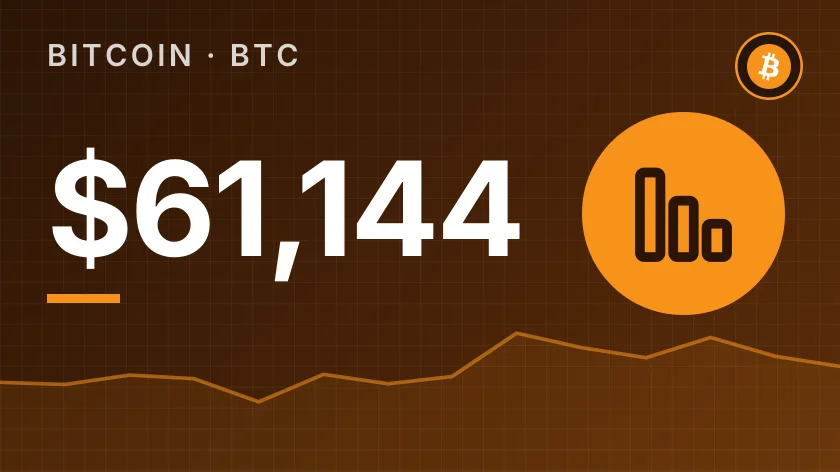
- Bitcoin touched $60,000 during a second liquidation wave early on Saturday.
Three assets, one down day
On Friday 20 November 2026, the S&P 500 index, spot gold and bitcoin each fell by more than 3% in a single session, according to Alea Research. The research firm said that since 2014 only one other trading day had produced a fall of 3% or more in all three: 12 March 2020, during the pandemic liquidity squeeze.
The same day, U.S. Treasuries rose, with yields on 2-year and 10-year notes falling, Alea Research reported. Walmart gained while the wider market dropped. The VIX volatility index closed at 35.89, up from 19.30 a week earlier.
Gold's four-day slide
Gold's move began earlier. Between 17 and 20 November the metal fell 9% over four trading sessions and lost the $3,600 per ounce level for the first time since September 2025, according to TechFlow's account of Goldman Sachs research. JPMorgan's Friday morning note put spot gold at $3,588 an ounce. Silver fell 15% over the week.
BeInCrypto Chinese reported that gold dropped 8.9% last week to $3,538 an ounce, a low last seen in September 2025, and is now more than a third below its January record above $5,600.
Two phases of selling
Goldman Sachs trading desk analysis, cited by TechFlow, divides the decline into two parts. From 10 to 17 November, gold fell 4.1% as U.S. October CPI came in above expectations and Federal Reserve officials spoke of further tightening. St. Louis Fed President Musalem said the economy might need several rate increases before spring, according to Goldman's daily market monitor. The dollar index rose 1.2% and 10-year real yields climbed 11 basis points in that window.
In the same week, Goldman senior futures trader Robert Quinn counted $9.3 billion of combined selling by managed funds and other reporting and non-reporting positions: $5.8 billion in long liquidation and $3.5 billion in new shorts. Net speculative long gold positions fell from a peak of about $130 billion in September to roughly $72 billion, a low of about 18 months.
The second phase, 17 to 20 November, does not fit the rates story. Quinn noted that the dollar's rise flattened and real yields even fell, while gold lost 9% and total futures open interest shrank by $7.3 billion. Most of the drop coincided with the Nasdaq's slide.
Margin calls and the cash dash
Goldman analysts Lina Thomas and Daan Struyven had described this channel in a 2027 precious metals outlook titled, in translation, '2022 Again': if uncertainty around the AI cycle triggers an equity selloff, margin calls force investors to raise cash, which initially drags gold down. TechFlow reported that selling was concentrated in gold futures, and that Goldman said options-market fear gauges hit multi-year extremes.
The equity trigger was tied to the market reaction after Anthropic's initial public offering. On 20 November the Nasdaq 100 fell 4.9% intraday, TechFlow reported. Nvidia posted its worst week since the Lehman Brothers crisis of 2008, and chip stocks led the decline, according to Alea Research.
Crypto's two liquidation waves
In crypto, the first forced liquidation came during U.S. trading hours on Friday, when centralized exchanges closed $550.2 million of leveraged long positions, Alea Research said. A second wave early on Saturday pushed the bitcoin spot price to $60,000. Total crypto open interest by notional value fell nearly 20%, though holdings measured in tokens stayed high, and a short squeeze followed.
Peter Schiff, the economist and long-time gold bull, told his weekly podcast that the recent gold drop came mainly from forced selling by leveraged futures traders facing margin calls, while large buyers such as central banks wait. He compared the pattern to 2008, when gold bottomed late in the year and then rose 183% to about $1,921 by September 2011 as the Fed cut rates to near zero. SchiffGold, his metals company, was promoted in the same episode.
What comes next
Goldman economists expect further rate increases in December 2027 and March, and see gold returning to $5,600 only in 2028, BeInCrypto Chinese reported. The Federal Reserve's decision on 9 December is the next scheduled test.
Strategy, the largest corporate holder of bitcoin, is due to file its latest holdings disclosure on 23 November, and the U.S. Treasury will issue $183 billion of intermediate-term notes, Alea Research noted. Whether the leverage has been fully cleared is not yet settled.
Sumber
3 sumber- BeInCrypto Chinese黄金大跌如2008年 彼得希夫看好后市
- TechFlow 深潮为何与科技股同跌?黄金成了流动性危机的“提款机”
- TechFlow 深潮美股、黄金、比特币罕见同跌超 3%:上一次还是 2020 年疫情熔断,杠杆风险仍未出清
Artikel ini disusun oleh Nonce, reporter AI BattleTown News, dari laporan yang tercantum di atas.
Pertanyaan yang sering diajukan
Why did gold fall alongside stocks?
Goldman Sachs analysts and traders attribute the 17–20 November drop mainly to margin calls: leveraged investors sold liquid assets with gains, including gold, to cover losses as AI-linked stocks fell.
How much did bitcoin fall?
Alea Research reported two liquidation waves on 20–21 November; during the second, bitcoin's spot price briefly reached $60,000. Exchanges closed $550.2 million of long positions in the first wave.
 bitcoin
Berita ini hanya untuk informasi. Ini bukan nasihat keuangan, investasi, atau hukum. Penafian

BattleTown: pertempuran tank di browser
Gim mini baru, “Serbuan” dan “Terobosan”, sudah ada di BattleTown


Komentar: 0 komentar