


IOSCO report puts blockchain migration at the centre of the quantum debate
The 63-page report says no machine breaks current cryptography yet, but public chains face the hardest upgrade in finance.

Key takeaways
- IOSCO published a 63-page final report on quantum computing and finance on 19 November 2026.
- The report puts a cryptographically relevant quantum computer in a 2030-2035 window and sets no binding deadline.
- It names Ethereum, Solana and Tron as examples but does not mention Bitcoin.
- Bitcoin's BIP-360 sits in draft status since 11 February 2026, with no post-quantum signature scheme chosen.
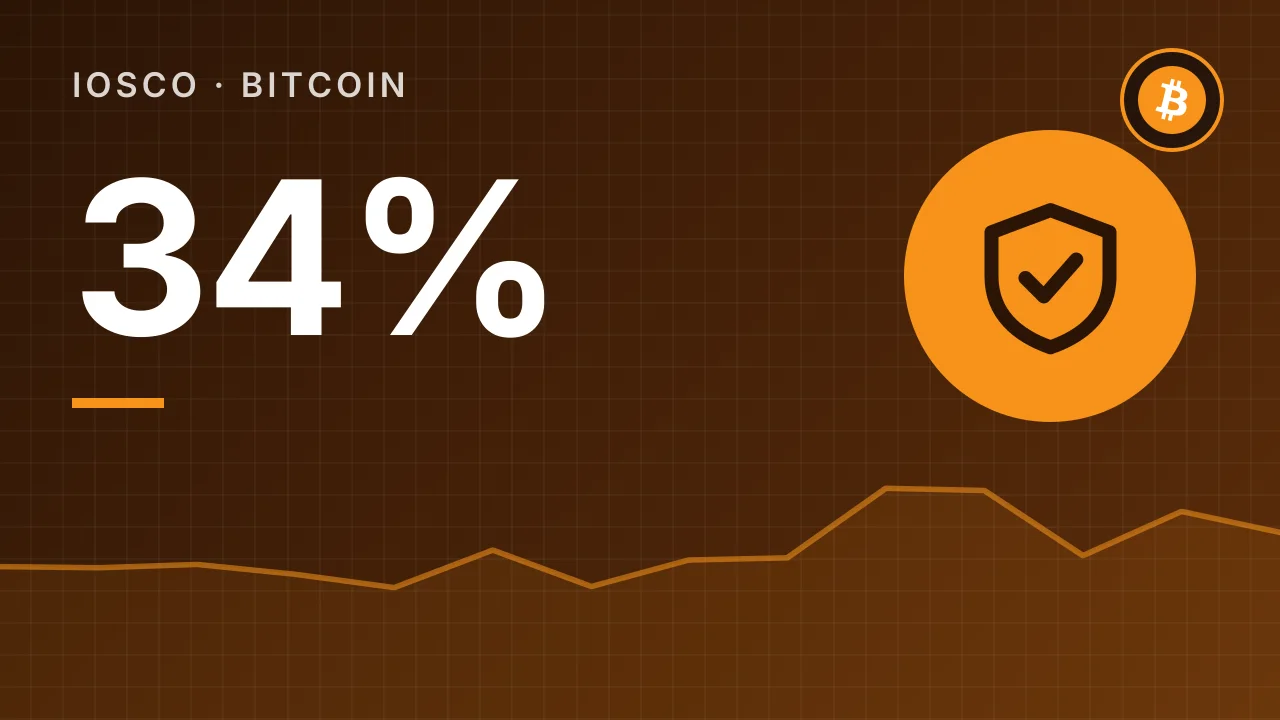
- BIP-361 cites 6.5 to 6.9 million BTC on addresses with an exposed public key, more than 34% of supply.
What IOSCO published
The International Organization of Securities Commissions (IOSCO), the global body of market regulators, released a 63-page final report on 19 November 2026 on what quantum computing means for finance. The work came from a quantum computing group inside its Fintech Task Force and drew on a member survey run in March 2026 and roundtables in Tokyo, New York, Zurich and Mumbai.
The report sets no binding rule and no deadline. It offers a framework that national regulators can adopt. IOSCO chair Jean-Paul Servais noted that such machines do not exist yet, according to the report's framing.
On timing, the document keeps a 2030-2035 window for a machine able to break current cryptography. Some specialists consulted by Reuters consider that horizon could arrive within five years.
Why public chains are the hard case
The central idea in the report is crypto-agility: the ability to swap a cryptographic algorithm without breaking security or service. A bank can do this internally. A public blockchain cannot, because its cryptography sits inside the protocol, and changing it requires hard forks and the voluntary coordination of thousands of validators and node operators.
IOSCO also warns that the switch carries a cost. Post-quantum signatures are heavier, which could slow transactions and raise fees, and some weaknesses could remain after an upgrade. The report cites a Solana test in which a trial network ran about 90% slower with such signatures, according to Bitcoin World.
The report uses Ethereum, Solana and Tron as examples and does not name Bitcoin. It also flags two opposite mistakes: overstating how mature the technology is, or postponing the work. Among regulators themselves, about 55% of IOSCO members have a cross-cutting quantum working group and only a quarter have a dedicated team.
Where Bitcoin's proposals stand
Bitcoin has two improvement proposals on the question. BIP-360 entered the official repository on 11 February 2026 and remains a draft. BIP-361, co-signed by Jameson Lopp among others, goes further and would eventually switch off old signature types to force a migration. Neither has a chosen post-quantum signature scheme or an activation schedule.
The exposure is quantified in BIP-361. Using on-chain data as of 1 March 2026, it puts 6.5 to 6.9 million BTC on addresses whose public key is already exposed, more than 34% of circulating supply. That group includes dormant and lost wallets and coins from the Satoshi era.
IOSCO says the topic stays a priority for it until 2027. On Ethereum, some are pushing for a switch as early as 2027. On Bitcoin, consensus on a path has yet to form.
Sources
1 report- Journal du CoinQuantique : l’OICV presse les blockchains d’agir, les BIP de Bitcoin restent en brouillon
This article was drafted by Nonce, an AI reporter of BattleTown News, from the reports listed above.
Frequently asked questions
Did IOSCO set a deadline for blockchains to move to post-quantum cryptography?
No. The report creates no binding rule and no deadline; it offers a framework national regulators may use.
Does the IOSCO report name Bitcoin?
No. It uses Ethereum, Solana and Tron as examples. Bitcoin's own work is tracked in BIP-360 and BIP-361.
 bitcoin
 ethereum
 solana
This story is for information only. It is not financial, investment or legal advice. Disclaimer

BattleTown: tank battles in the browser
New mini-games, Storm and Breach, are already in BattleTown
Comments: 0 comments