BTC
 ETH
 USDT
 BNB
 USDC
 XRP
 SOL
 TRX


Trezor removes most resellers after three tampered wallets surface
Only about a fifth of vendors met the new sourcing and storage rules; three tampered Safe 5 devices were found among 48 customers
Key takeaways
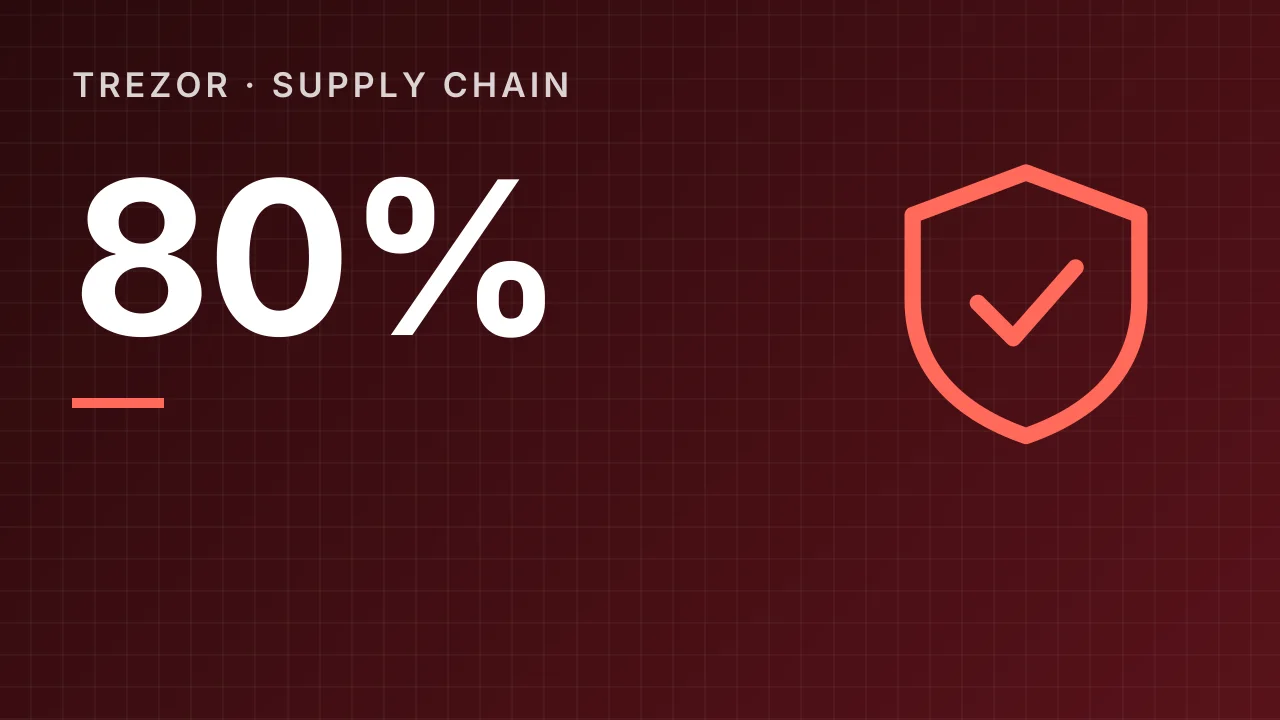
- Trezor cut about 80% of its resellers after tightening rules on sourcing, storage and device access.
- The company said the dropped vendors were trustworthy and posed no immediate threat.
- Three Safe 5 wallets sold via CryptoBilis had an extra board that recorded recovery phrases and passphrases.
- The tampered devices were found among 48 customers who contacted Trezor after its October warning; no losses were reported.
- Firmware 2.13.1, released on 11 November 2026, is said to block the identified implants.
A smaller vendor list after a supply-chain check
Trezor has removed roughly 80% of its resellers after a review of how devices reach customers. The hardware wallet maker said only about a fifth of its vendors met the stricter requirements it introduced in response to tampered devices sold through the Malaysian seller CryptoBilis.
The new rules cover where devices come from, how they are stored and who can handle them. Trezor said the resellers it dropped had done nothing wrong and did not present an immediate danger.
The company's update came on 12 November 2026, a day after it published firmware version 2.13.1.
What the hidden board did
The investigation covered wallets bought between August and September 2026. Trezor found three compromised Safe 5 devices among 48 customers who got in touch after the company's first warning in October. According to Trezor, none of those customers has reported losing funds.
In each case an extra circuit board sat between the main board and the screen. It recorded what the display showed, including recovery phrases and passphrases, which can be used to reach a wallet's funds. The implant encrypted what it captured and sent it over a mobile network to servers run by the attackers. If no connection was available, it kept the data and sent it once a connection returned.
Firmware change and what customers were told
Trezor says version 2.13.1 blocks the implants it identified from capturing sensitive information. A company spokesperson described the mechanism to Protos: "The implant listens to the communication between the MCU and the display and triggers the capture when it sees a specific sequence."
To defeat that trigger, Trezor said it reordered the commands sent to the screen without changing what the screen shows. The company said this makes the implants useless.
Owners of affected devices were still advised to move their funds to newly generated wallets. Trezor has not said how many devices from the CryptoBilis batch remain in use, or whether the reseller review will be extended to other markets.
Sources
2 reports- ProtosTrezor cuts reseller network by 80% after finding more spy implants
- GNcryptoTrezor Cuts Reseller Network After Wallet Implants Found
This article was prepared by BattleTown Newsroom from the reports listed above.
Frequently asked questions
How many tampered wallets were found?
Trezor said the three compromised devices were found among 48 customers who contacted the company after its October warning. No customer has reported losing funds, according to the company.
What does firmware 2.13.1 do?
Trezor released firmware version 2.13.1 on 11 November 2026. The company says it stops the identified implants from capturing sensitive information. Customers with affected devices were still told to move funds to newly generated wallets.
This story is for information only. It is not financial, investment or legal advice. Disclaimer

BattleTown: tank battles in the browser
New mini-games, Storm and Breach, are coming soon to BattleTown