


Dieser Beitrag ist noch nicht in Ihre Sprache übersetzt. Er wird auf Englisch angezeigt. Das Original auf Englisch lesen
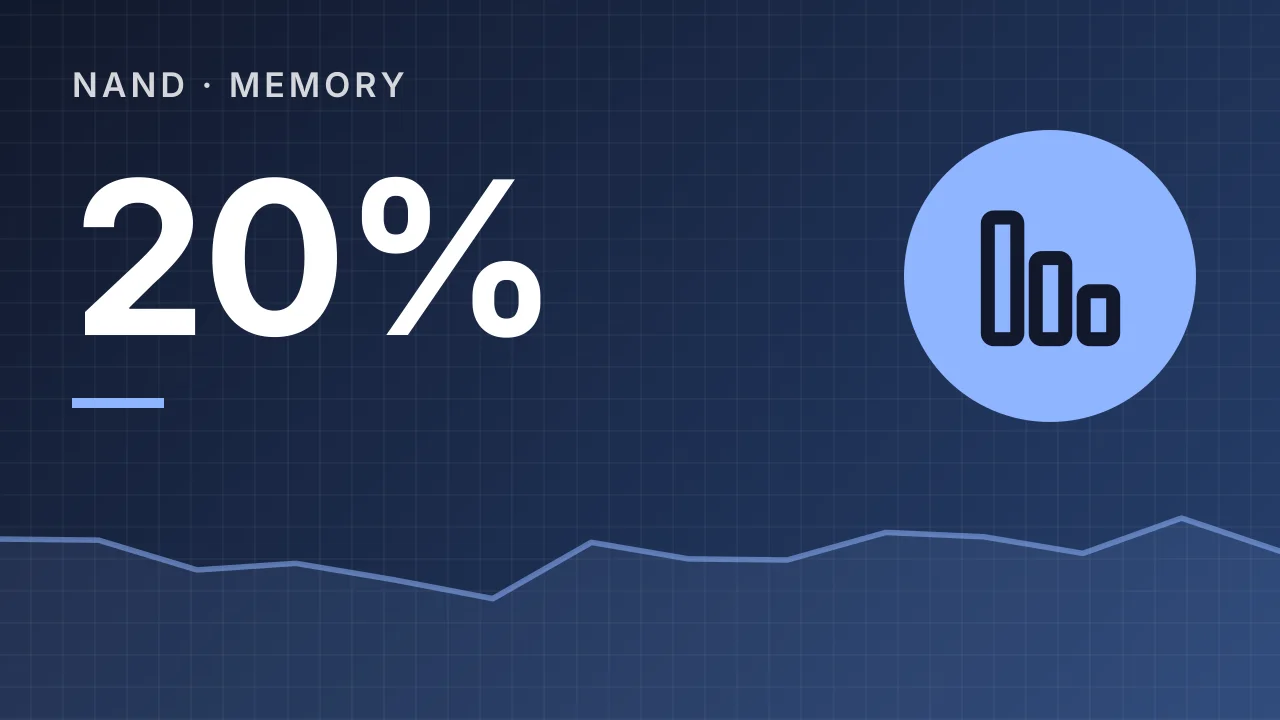
Consumer NAND flash prices fall 20% amid AI demand
Spot prices for memory used in phones and laptops dropped in October, while enterprise SSD and DRAM prices continue to rise.
Das Wichtigste
- > Consumer-grade NAND flash spot prices decreased by approximately 20% over the last month, according to a Bank of America report.
- > Enterprise SSD and DRAM prices, used in AI data centers, are currently increasing.
- > Retail price drops for devices like smartphones and PCs are not expected to happen immediately.
- > Supply chain issues, including older production lines, are creating a divergence in the memory market.
Memory Market Divergence
A Bank of America report indicated that the spot prices for consumer-grade NAND flash memory, which is used in smartphones and laptops, fell by about 20% since mid-to-late October.
NAND chips are the components that store data in devices like phones and SSD storage. The market is currently split between consumer and enterprise segments.
The decline in consumer NAND prices is linked to weakening demand, which is partly attributed to factors such as reduced ordering from large Chinese cloud providers and lower shipment volumes for global smartphones and PCs.
Enterprise Memory Trends
In contrast to the consumer segment, enterprise-grade SSD chips used in AI data center servers are still seeing price increases.
TrendForce estimates that the contract price for enterprise SSD units is projected to increase by 15% to 20% in the fourth quarter. Bank of America also maintains forecasts of an 8% increase for DRAM in the fourth quarter and a 5% increase in the first quarter of next year.
Pricing Dynamics and Supply
The report clarifies that spot prices, which reflect short-term trading by resellers, react quickly, while contract prices, which are long-term agreements between manufacturers and major clients, take longer to adjust.
The Bank of America noted that a structural issue exists where 20% to 30% of global NAND capacity uses older production lines that cannot be quickly converted to produce advanced chips needed for enterprise SSD applications.
This situation results in a scenario where high-value products face shortages while general products accumulate inventory.
Outlook for Consumers
The report stated that the drop in spot prices does not guarantee a reduction in retail prices for consumers.
Bank of America projects that contract prices for NAND used in phones and PCs might decrease by 5% to 10% in the first quarter of next year, while enterprise prices are expected to remain stable or slightly increase.
Retail prices are generally expected to reflect these changes later.
Quellen
1 Bericht- BlockTempo 動區動趨消費級 NAND 價格一個月跌 20%,手機、筆電會變便宜嗎?
Dieser Artikel wurde von BattleTown Newsroom auf Grundlage der oben genannten Berichte erstellt.
Dieser Beitrag dient nur der Information. Er ist keine Finanz-, Anlage- oder Rechtsberatung. Haftungsausschluss

BattleTown: Panzerkämpfe im Browser
Neue Minispiele, „Sturm“ und „Durchbruch“, sind schon in BattleTown




Kommentare: 0 Kommentare