


Ten artykuł nie został jeszcze przetłumaczony na Twój język. Wyświetlamy go po angielsku. Przeczytaj oryginał po angielsku
Coinkite: Coldcard seed bug went unseen through 15 reviews since 2021
A firmware release sent recovery phrases to a software generator; roughly 300 loss tickets covering 242 accounts were logged by 18 November.
Najważniejsze
- Coinkite's postmortem, dated 23 November 2026, says the seed-generation flaw existed since firmware released on 29 March 2021.
- Affected Mk2 and Mk3 wallets had about 40 bits of effective entropy; Mk4, Mk5 and Q models about 72 bits, against a 128-bit target.
- Coinkite had logged roughly 300 loss tickets covering 242 accounts as of 18 November.
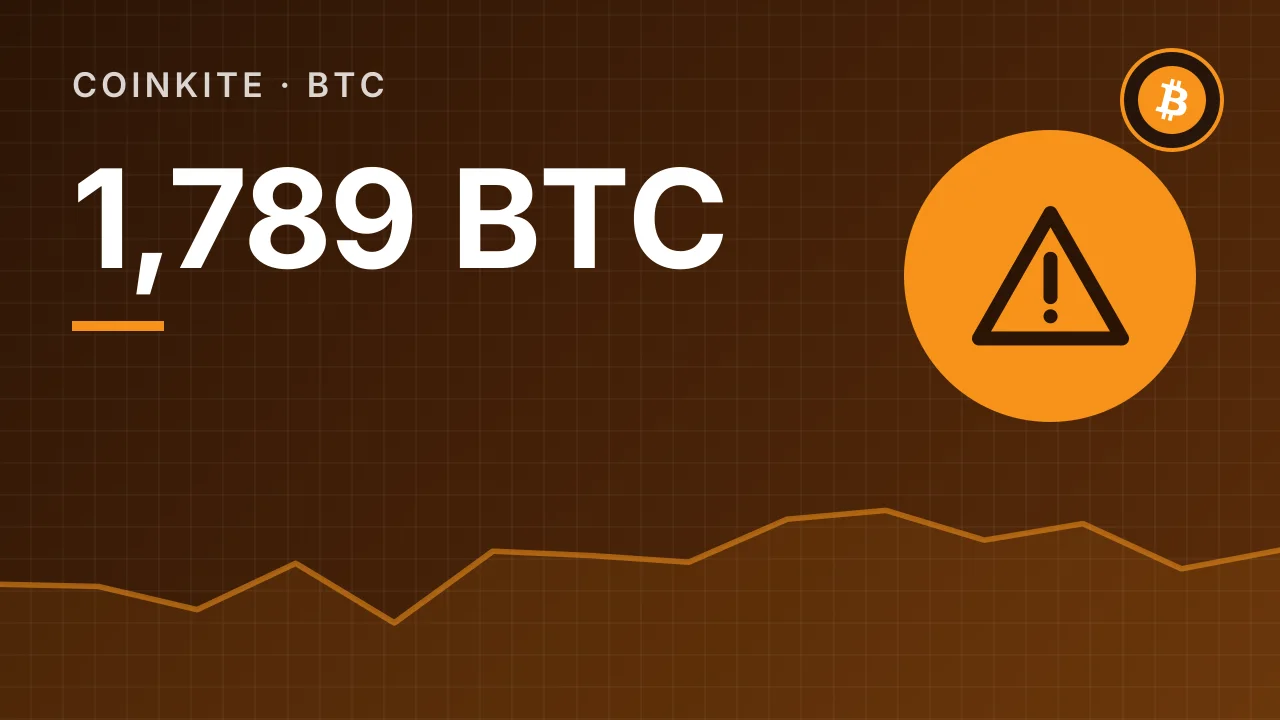
- At least 1,789 BTC was taken, worth about $114.7 million at the time.
- Three of the 15 recommendations in the report remain open, including further independent security reviews.
A silent substitution in the firmware
A firmware release from 29 March 2021 sent the creation of Coldcard wallet seeds to a software-based pseudo-random generator instead of the hardware random number generator the design called for, according to a postmortem Coinkite published on 23 November 2026. The company says the hardware generator did not fail while running and no fallback was triggered, because both implementations exposed a compatible interface.
The result was recovery phrases that looked valid but rested on far less randomness than intended. Coinkite estimates that affected Mk2 and Mk3 devices had roughly 40 bits of effective entropy, and Mk4, Mk5 and Q models about 72 bits, against a target of 128 bits. The company says the second figure has not been confirmed independently.
The thefts and what Coinkite counted
Unexpected transactions from compromised seeds began on 29 July. Customers spotted the thefts the next day, Coinkite opened an investigation, located the weakness and issued a warning; corrected firmware followed on 31 July, and devices still in stock were quarantined and later retired.
By 18 November the company had recorded about 300 support tickets tied to losses, spanning 242 accounts, or roughly 0.21% of its estimated customer base. Coinkite cautions against reading that share as the true scale: it says the affected group is probably larger, since not every victim files a ticket, and that no confirmed total exists. At least 1,789 BTC was stolen, worth about $114.7 million at the time, and an analysis by Chainalysis attributes around a quarter of the traceable losses to Canadian users, with investors in Western Europe also affected.
Why the checks missed it
Reviews during the five years included third-party audits in 2022 and 2024, public code inspections, reproducible-build checks and AI-assisted firmware assessments. A review by Nick Farrow dated 17 June 2026 looked directly at random number generation and concluded the implementation was sound. Rob Hamilton's assessment with the OpenAI Cybersecurity Harness produced 85 possible findings, none of them the integration error.
Coinkite concedes that each of its own checks answered a side question rather than the decisive one. The report also notes that independent Bitcoin developer James O'Beirne raised concerns in May 2025 about libNgU, an embedded cryptographic wrapper, and recommended removing it, though Coinkite says he did not identify the specific integration fault. Public source code and reproducible builds made the error verifiable, the company writes, but nobody examined that path.
An AI hypothesis without evidence
The report gives space to whether AI helped find the flaw, particularly the release of the Kimi K3 model in July, whose full weights became public two days before the first recorded thefts. Coinkite calls an AI-assisted discovery a plausible hypothesis given how short that gap is, but provides no evidence that the attackers used Kimi K3 or any other model. Later AI-assisted investigations could reproduce the weakness, yet several models failed to find it.
Who carried out the thefts and how the fault was discovered remain unknown, according to the report. Law enforcement is still investigating, and the Canadian Centre for Cyber Security has its own case open.
What users must do, and what is still pending
An independent assessment by Keylabs published on 15 October concluded that the gap is closed in four firmware files it examined. Later Coldcard versions added a mandatory user-supplied random value, extra hardware entropy sources and stricter review procedures. The corrected firmware cannot make an already compromised recovery phrase safe: customers have to generate new seeds with the verified firmware and move their funds, including balances in wallets protected by an additional passphrase.
Of the 15 recommendations Coinkite lists, three are still open: further independent security reviews, recovery of the Coldcard X account and one more item. The company has not yet decided on a compensation plan for victims.
Źródła
3 źródła- Bitcoin.com News DEBitcoin-Diebstahl bei Coldcard in brisantem 18-seitigen Bericht aufgedeckt
- BlockonomiColdcard Flaw Passed 15 Security Reviews Because No One Checked If It Worked
- CryptoActuColdcard : une faille a échappé à 15 contrôles de sécurité
Ten artykuł przygotowała redakcja BattleTown Newsroom na podstawie wymienionych wyżej raportów.
Najczęstsze pytania
Which Coldcard models were affected?
Coinkite estimates Mk2 and Mk3 wallets had about 40 bits of effective entropy and Mk4, Mk5 and Q models about 72 bits, against a 128-bit target. The second estimate has not been independently confirmed.
Can owners of an affected wallet still secure their funds?
The corrected firmware cannot repair an exposed recovery phrase. Coinkite says users must create new seeds with the verified firmware and transfer their balances, including funds in wallets with an additional passphrase.
 bitcoin
Ten artykuł ma charakter wyłącznie informacyjny. Nie jest poradą finansową, inwestycyjną ani prawną. Zastrzeżenie

BattleTown: bitwy czołgów w przeglądarce
Nowe minigry, „Szturm” i „Przełom”, już w BattleTown


Komentarze: 0 komentarzy