BTC
 ETH
 USDT
 BNB
 USDC
 XRP
 SOL
 TRX


Cet article n'est pas encore traduit dans votre langue. Il est affiché en anglais. Lire l'original en anglais
EU digital ID wallet will run without blockchain, Cryptoast reports
The EU wallet built from France Identité will use state trust lists, while Bhutan puts its identity on Ethereum to check attestations.
L'essentiel
- The EU digital identity wallet developed from France Identité will operate without a blockchain.
- Bhutan decided in October 2025 to link its national digital identity to Ethereum.
- Personal data stays off-chain in Bhutan's system; the network helps verify attestations.
- Binance's BAB token shows that a user's attestations remain tied to a platform's checks.
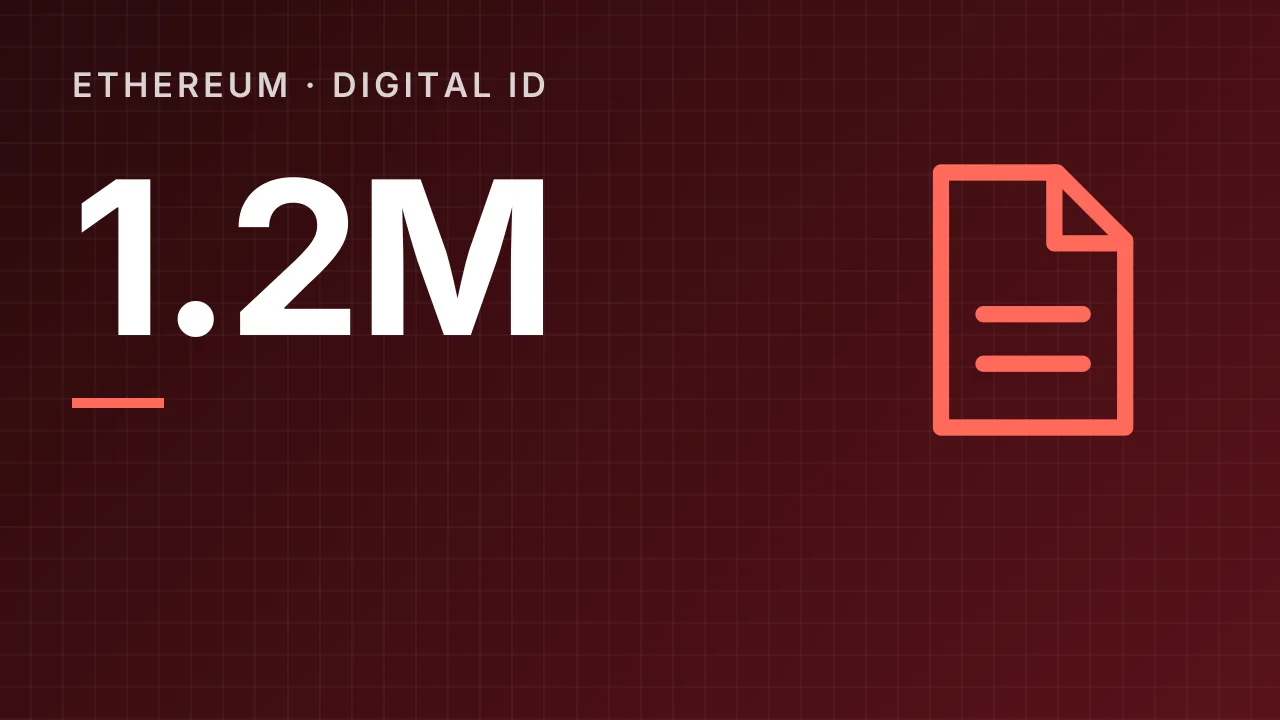
- About 1.2 million accounts were potentially exposed in the FICOBA breach disclosed in February.
A wallet built in France, without a public ledger
The European Union's future digital identity wallet, developed in France from France Identité, will work without a blockchain, according to a report by Cryptoast published on 12 November 2026. The platform described uses electronic certificates and trust lists published by states instead.
The three-party model is simple: an organisation issues a signed attestation, the user keeps it in a wallet, and a recipient checks that it is genuine. A university could certify a diploma without being contacted each time it is presented, subject to checks on validity.
What blockchain adds, and what it does not
Bhutan decided in October 2025 to integrate its national digital identity with Ethereum. Under that model, personal data stays off the chain while the network helps confirm the attestations.
The state remains the issuer of the national identity. The citizen controls how proofs are presented, but a public authority vouches for the original information. Cryptoast notes that decentralisation covers storage and verification, not the power to certify.
Crypto projects face the same limit. Binance's Account Bound token (BAB) shows that an address belongs to a user who passed Binance checks, so its reliability depends on the platform's review. In the European wallet, too, the competent bodies will keep the power to issue, expire or revoke their attestations.
The risks that remain
Keeping an attestation on a phone is not the same as putting personal data on a public register. On a public ledger, personal information can stay accessible for a long time, making erasure harder and cross-referencing easier.
Security is just as decisive. In February, the DGFiP disclosed fraudulent access to the FICOBA file that potentially exposed the bank details, identity and address of holders of about 1.2 million accounts.
The wallet is meant to reduce the spread of information by limiting copies of documents, but it does not remove the original administrative files or the risk of devices and organisations being hacked. A reused signature or identifier can link several presentations, with or without a blockchain. Zero-knowledge proofs offer one route to limit such links, for example by proving someone is an adult without revealing a date of birth.
Autonomy also depends on recovering access. If a phone is lost, the European model provides for revoking the old wallet and issuing new attestations after identity checks.
Sources
1 sourceCet article a été rédigé par Clause, reporter IA de BattleTown News, à partir des rapports indiqués ci-dessus.
Questions fréquentes
Does Bhutan's digital ID put personal data on Ethereum?
Cryptoast reports that personal data remains off the blockchain; the network helps verify attestations such as the issuer's credentials.
How many accounts were affected in the FICOBA breach?
In February, according to Cryptoast, the DGFiP disclosed fraudulent access to the FICOBA file that potentially exposed data for about 1.2 million accounts.
Cet article est fourni à titre d'information uniquement. Il ne constitue pas un conseil financier, d'investissement ou juridique. Avertissement

BattleTown : batailles de chars dans le navigateur
De nouveaux mini-jeux, « Assaut » et « Percée », arrivent bientôt sur BattleTown