BTC
 ETH
 USDT
 BNB
 USDC
 XRP
 SOL
 TRX


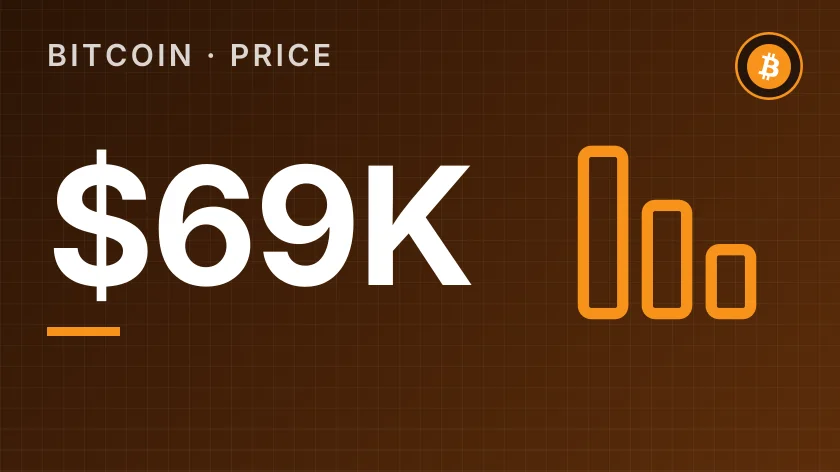
Bitcoin drops 5.5% to $73,954 as AI stock selloff hits crypto
Spot bitcoin funds lost $1.06 billion over five sessions, and Fed Governor Christopher Waller backed a December rate increase.

Key takeaways
- Bitcoin fell 5.5% over the week to $73,954 as a selloff in AI stocks spread to crypto.
- On 5 November bitcoin lost 6.53% and the Nasdaq 5.5%, with liquidations above $1.2 billion in 24 hours.
- Spot bitcoin funds saw a net outflow of $1.06 billion over five trading sessions.
- Miner MARA sold 13,597 BTC for about $1.1 billion, roughly 40% of its end-September holdings.
- CME futures priced an 88.3% chance of a quarter-point Fed rate increase in December.
A week of two halves
Bitcoin fell 5.5% over the week to $73,954, according to Coinspot.io, as a selloff in U.S. artificial-intelligence stocks spread into crypto. On 4 November the picture was still positive: Wall Street had its best day in three months, and bitcoin rose close to $81,200 after the New York open, a weekly high. Spot bitcoin funds took in just $74.6 million that day, and Bitfinex attributed the move mainly to traders closing short positions rather than to new money.
The reversal came on 5 November. The S&P 500 lost 4.4% and the Nasdaq 5.5%, their worst day since April 2025, with Nvidia among the main sources of pressure. Bitcoin began falling before the U.S. session opened; two hours after the open it was more than $4,000 cheaper than in the morning. Crypto exchanges liquidated about $428 million of leveraged positions in one hour, and CoinGlass put 24-hour liquidations above $1.2 billion.
Bitcoin lost 6.53% that day, Ethereum 8.75%, XRP 10.3% and Solana 7.48%. "The market is moving from the promise of AI to the price of AI," Ted Parkhill, head of Incline Investment Management, said. John LaForge, a strategist at Ned Davis Research, called the move typical of a broad selloff in risk assets.
Fund outflows and a second leg down
In the night to Monday, 9 November, bitcoin fell from $75,690 to $73,477 in 15 minutes, with liquidations above $1 billion in that window. Market participants gave no convincing explanation for the timing. Bitfinex analysts wrote that a market held up by long perpetual futures positions rather than spot buying "usually breaks levels in cascades".
On 8 November bitcoin closed at $74,834, the first daily close below the average price paid by recent buyers since the rally that began in July, according to Bitfinex. Wall Street partly recovered on Monday, with the Nasdaq Composite up 2.7%, but bitcoin barely moved: about $74,700 near the U.S. open and under $74,900 at the close. CoinDesk linked the gap to continued withdrawals from bitcoin funds.
Investors pulled $201 million from bitcoin funds on Monday alone, after outflows above $400 million on each of Thursday and Friday. Over five trading sessions the net outflow reached $1.06 billion from bitcoin funds and $326.1 million from Ethereum funds. Bitfinex estimated that by Monday the average buyer of a bitcoin fund was down 10.5%.
Miners sell, Strategy buys
Mining companies added to the pressure. MARA told shareholders it had sold 13,597 BTC for about $1.1 billion after the third quarter ended, roughly 40% of its holdings at the end of September. It used $750 million of the proceeds to fully repay bitcoin-backed loans and warned it would keep selling coins, including to invest in AI infrastructure. Another miner, Hyperscale Data, sold its remaining bitcoin to cut debt and fund a data-center build.
Strategy moved the other way, buying 1,036 BTC for $81.9 million between 2 and 8 November and spending a further $188.3 million to repurchase its own preferred shares. By Wednesday bitcoin was below $75,456, the average cost of a coin in Strategy's holdings.
Rate expectations shift
October U.S. employment data showed 165,000 jobs added against a forecast of about 60,000. Bitcoin lost about 0.4% within an hour of the release and then almost recovered. Bitfinex said the strong figures raised the odds of a Federal Reserve rate increase in December.
On 10 November, Fed Governor Christopher Waller said in London that he would support a quarter-point increase in December even if inflation slowed. If core prices rose about 0.3% or more in the month, he said, a half-point increase should be discussed. "A quarter-point hike would put our credibility at risk, and I am not eager to take that risk," Waller said.
October inflation matched that condition: consumer prices rose 0.4% for the month and core prices 0.3%, each 0.1 percentage point above forecasts. No annual figures were published because statistics were not collected during the October 2025 government shutdown. By the evening, CME futures priced an 88.3% chance of a quarter-point increase and 11.7% for a half point, against 74.9% on 2 November.
Sources
1 reportThis article was prepared by BattleTown Newsroom from the reports listed above.
Frequently asked questions
How far did bitcoin fall during the AI stock selloff?
Bitcoin fell 5.5% over the week to $73,954, according to Coinspot.io. On 5 November it lost 6.53% in a single day, its worst session of the period, as U.S. stocks also dropped sharply.
How much money left bitcoin funds?
Spot bitcoin funds saw a net outflow of $1.06 billion over five trading sessions, according to Coinspot.io, citing fund data. Ethereum funds lost $326.1 million over the same period.
What did miner MARA sell?
MARA said it sold 13,597 BTC for about $1.1 billion after the third quarter ended, roughly 40% of its holdings at the end of September. It used $750 million to repay bitcoin-backed loans and said it would keep selling coins, including to invest in AI infrastructure.
This story is for information only. It is not financial, investment or legal advice. Disclaimer

BattleTown: tank battles in the browser
New mini-games, Storm and Breach, are coming soon to BattleTown